You can hear the furnace running, but the house isn’t getting any warmer. Once winter settles in across Spokane and North Idaho, it’s one of the most common calls we get. Sometimes the fix takes two minutes. Other times it points to a part that’s wearing out. Here’s what you can safely check on your own, and the signs that mean it’s time to bring in a technician.
Safety first: If you smell gas, leave your home right away and call 911 or your gas utility once you’re outside. If your carbon monoxide alarm goes off, get everyone out of the house and call 911. Don’t run the furnace again until it’s been inspected.
Check the Thermostat Settings
Start with the simplest things. Make sure the thermostat is set to Heat and the temperature is set a few degrees above the current room temperature. If it runs on batteries, replace them. A programmable or smart thermostat may also be following a schedule that’s lowering the temperature when you don’t expect it.
Next, check the fan setting. If the fan is set to On instead of Auto, the blower runs all the time, including between heating cycles. That pushes cool air through the vents and can make it feel like the furnace isn’t heating at all. Switching the fan to Auto often solves the problem.
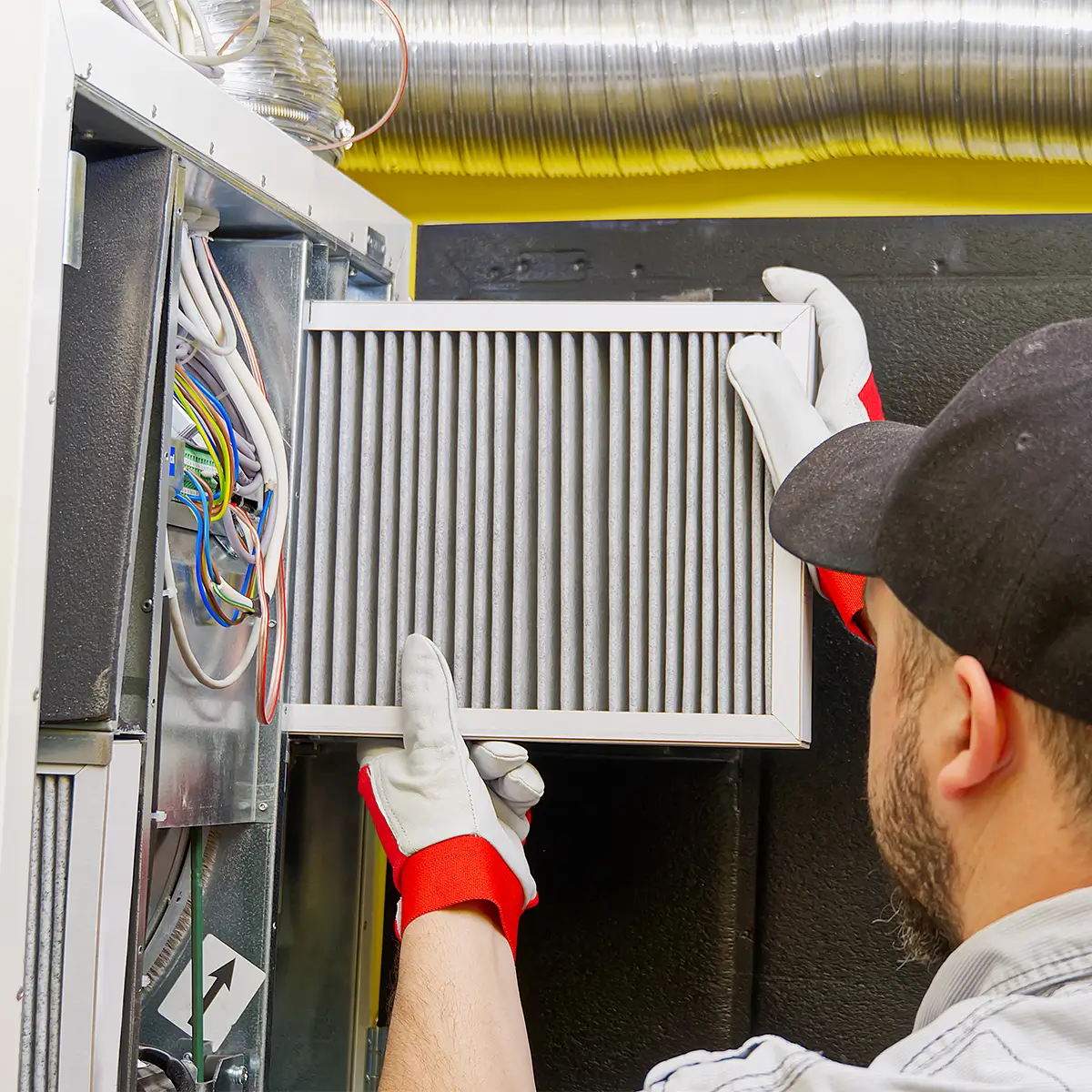
Look at the Air Filter
A clogged filter is one of the most common reasons a furnace runs without heating the house. When air can’t get through the filter, the furnace can overheat, and a safety switch shuts off the burners while the blower keeps running. The result is a furnace that sounds like it’s working but blows lukewarm or cool air.
Most homes should change a standard filter every one to three months. Check it more often if you have pets, allergies, or after a wildfire smoke season.
Make Sure Vents and Returns Are Open
Walk through the house and check that the supply vents in each room are open and not covered by furniture, rugs, or curtains. Do the same for the larger return grilles, which pull air back to the furnace. Closing vents in unused rooms might seem like a way to push more heat to the rest of the house, but it can restrict airflow and make the whole system work harder.
Clear Snow and Ice From Outdoor Vent Pipes
This one catches a lot of homeowners off guard after a big storm. High-efficiency furnaces vent through two plastic pipes, usually on a side wall or the roof. When heavy snow, drifts, or ice block those pipes, the furnace’s safety controls shut it down.
After a snowfall, check that both pipes are clear. Brush snow away gently by hand. Don’t chip at ice with a shovel or other tool, since a cracked pipe can create a much bigger problem. Keeping the area around the pipes clear through the winter helps prevent repeat shutdowns.
Check the Power and the Furnace Door
Look at your electrical panel to make sure the furnace breaker hasn’t tripped. Then find the furnace power switch, which usually looks like a standard light switch on or near the furnace, and make sure it’s on.
Also check that the furnace’s front panel is fully closed. Most furnaces have a door safety switch that keeps the system from running if the panel isn’t seated correctly, which can happen after a filter change.
Try One Reset
If everything above checks out, turn the furnace off at its power switch, wait about a minute, and turn it back on. This lets the control board restart. If the furnace starts and then shuts down again, don’t keep resetting it. Repeated restarts won’t fix the underlying problem, and the furnace may be shutting down for a safety reason.
Common Causes That Need a Technician
If the quick checks don’t solve it, the problem is likely inside the furnace or the ductwork. These are some of the issues our technicians find most often in winter:
- Dirty flame sensor. The burners light, then shut off after a few seconds because the sensor can’t confirm there’s a flame.
- Ignition problems. A worn hot surface igniter or a pilot issue can keep the burners from lighting even though the blower runs.
- Frozen or clogged condensate line. High-efficiency furnaces drain water as they run. If that line freezes or clogs, which is more likely when a furnace sits in a garage or crawlspace, the furnace shuts down.
- Blower motor or capacitor problems. Weak airflow means heat doesn’t reach the rooms that need it.
- Leaky or disconnected ductwork. Heated air can escape into an attic or crawlspace before it reaches your living space, leaving the rooms farthest from the furnace cold. ACI builds custom ductwork in our own sheet metal shop and handles duct repairs directly.
- An aging or undersized system. Some furnaces simply can’t keep up on the coldest nights, especially after years of wear or a home addition.
When to Call for Help
Call a technician if you’ve gone through the checklist and the house is still cold, or if you notice any of these:
- The furnace turns on and off repeatedly without warming the house
- A burning smell that lasts beyond the first day or two of the heating season
- Loud banging, grinding, or squealing
- Cool air from the vents for more than a few minutes with the fan set to Auto
If you have no heat during freezing weather, or someone in your home is elderly, very young, or has health concerns that make the cold dangerous, call right away. ACI Northwest offers 24/7 emergency service.
Heating Repair in Spokane and North Idaho
ACI Northwest has served Spokane, Spokane Valley, Coeur d’Alene, Post Falls, and the surrounding area since 1992. Our technicians repair all major furnace brands, including systems we didn’t install, and residential repairs come with a one-year warranty on parts and labor.
If you’d like fewer surprises next winter, our Premium Loyalty Maintenance Program includes two scheduled maintenance visits a year, priority service, and 20% off repairs.
Call us at (509) 482-2000 in Washington or (208) 772-9571 in Idaho, or schedule service online. Learn more about our heating repair services.