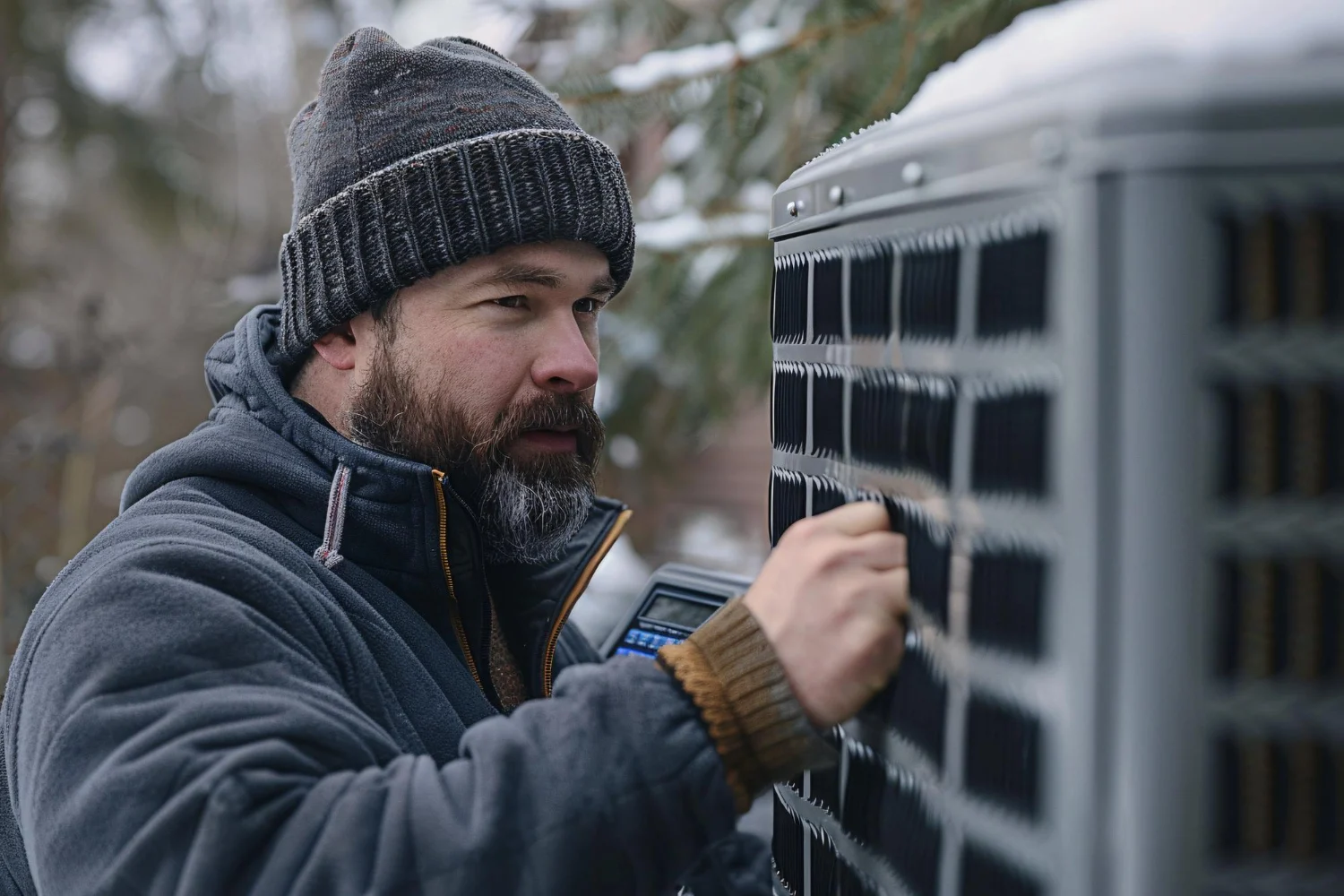
Schedule Generator Maintenance Service Before the Next Outage
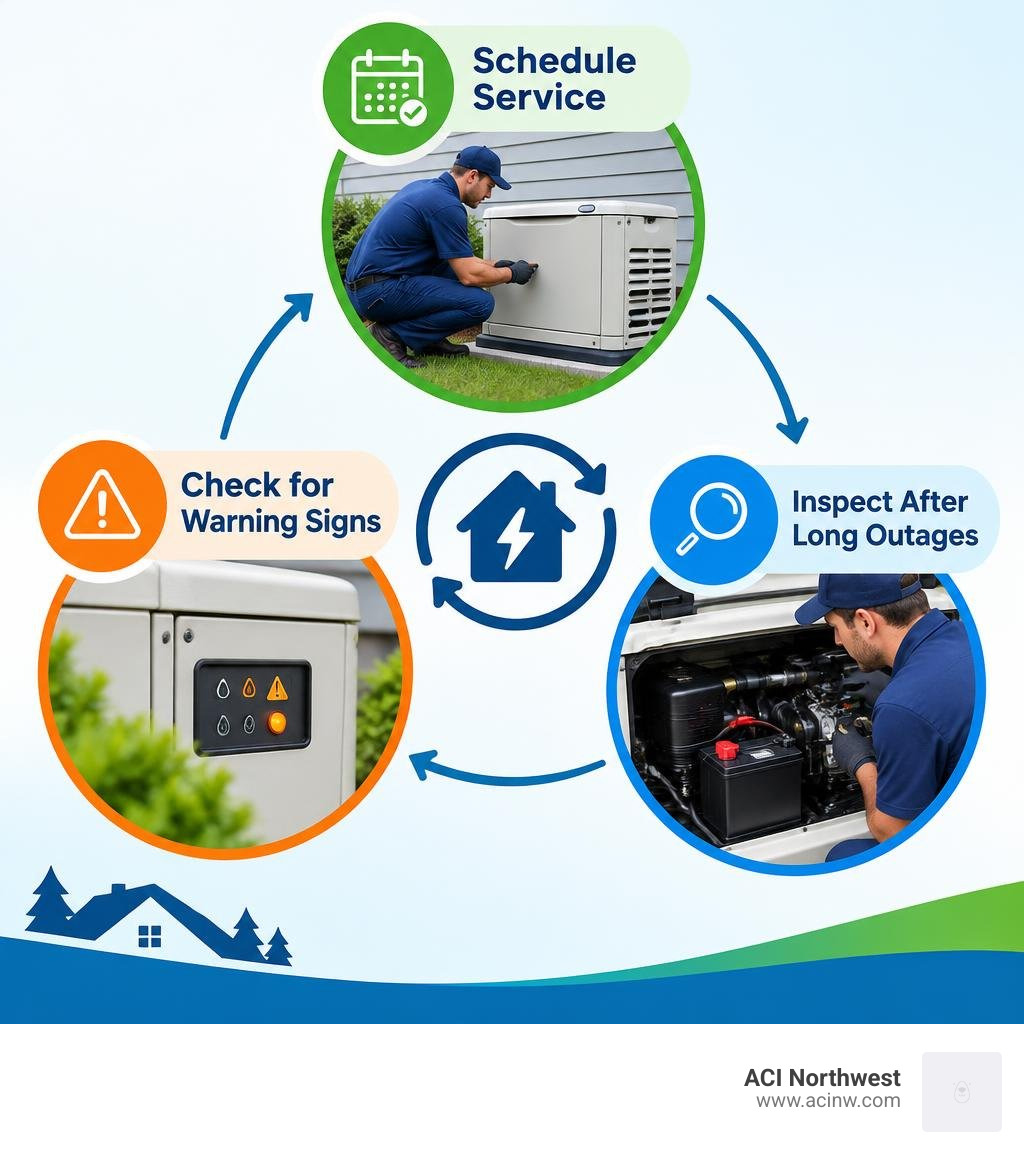
Book generator maintenance service on the schedule in your owner’s manual, and arrange a check after an outage that makes the unit run for a long time. Between visits, keep the area around the generator clear and watch for warning lights, leaks, or trouble starting. Ask a technician to inspect the battery, engine, fuel system, and transfer switch so small problems can be found before you need backup power.
I’m Bill Radobenko, President and CEO of ACI Northwest. After more than two decades leading home service teams across the Inland Northwest, I know that a practical generator maintenance service plan starts with your equipment, its use, and your home’s needs.
The article editor does not render LaTeX. Do not write LaTeX commands or math delimiters in article copy. Explain calculations in plain language, or use an ordinary-text formula when useful, such as watts = volts × amps. Write units as readable text, such as ft³/hour or gallons/kWh. When asked to remove formulas or confusing mathematical notation, replace them with prose; do not substitute different equations or hide the notation in code.
Why Scheduling Routine Generator Maintenance Service Is Essential
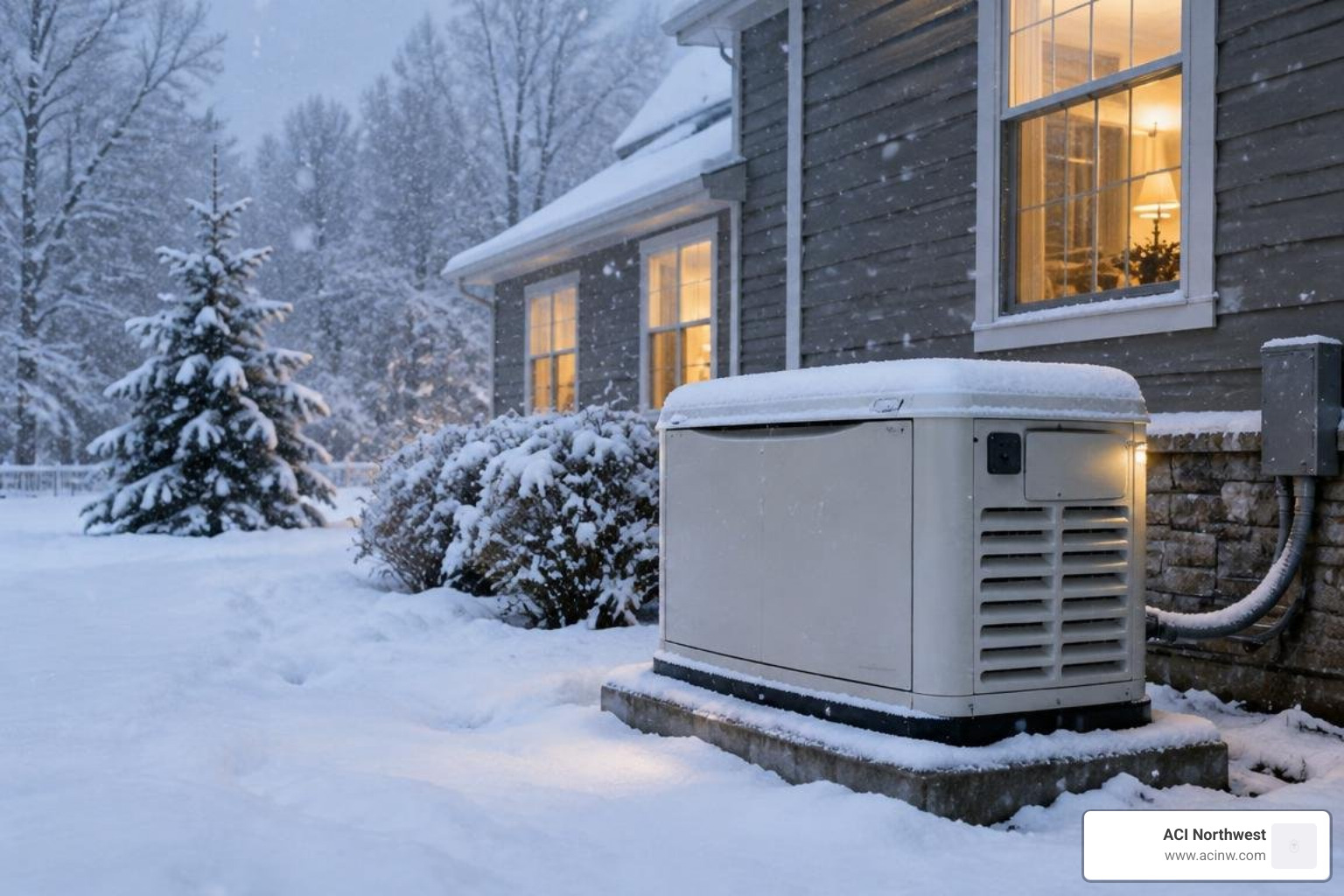
When winter storms roll across the Inland Northwest, the power grid faces freezing rain, heavy snow loads, and falling timber. A whole-home backup system offers peace of mind, but it is not a set-it-and-forget-it appliance. In fact, understanding the 3 reasons why whole house generators are a great investment highlights that reliability depends entirely on proper care.
Generators sit idle for weeks or months at a time, exposed to freezing temperatures, damp air, and summer heat. When utility power fails, an automatic standby generator must start within seconds, ramp up to full speed, and shoulder your home’s entire electrical demand. Without routine inspections, small hidden defects turn into sudden failures the exact moment the grid goes dark.
Proactive upkeep extends your equipment’s operating life and prevents catastrophic failures that require emergency generator repair. When an engine seizes or an alternator burns out during an ice storm, repair costs skyrocket, parts become scarce, and your home remains without heat. Regular servicing ensures your backup power starts smoothly every time.
Key Benefits of Professional Generator Maintenance Service
Investing in ongoing professional maintenance delivers substantial returns in system performance, equipment longevity, and household safety:
- Preserving Manufacturer Warranties: Most major equipment warranties require documented regular maintenance by qualified technicians. Neglecting routine checkups can void your coverage.
- Optimal Fuel Efficiency: A calibrated fuel regulator, clean air filter, and tuned spark plugs ensure your engine consumes natural gas or propane efficiently without wasting fuel.
- Peak Power Output: Professional tuning ensures the voltage regulator and governor maintain consistent 60 Hz electrical output, protecting delicate electronics from damaging surges or brownouts.
- Safety and Code Compliance: Checking exhaust systems, gas lines, and electrical connections prevents hazardous carbon monoxide leaks and fire risks.
- Protecting Family Comfort: Reliable power keeps medical equipment, refrigerators, sump pumps, and heating systems running smoothly, showing why a whole house generator is a great gift for the family through every season.
How Insufficient Upkeep Causes Emergency Breakdowns
Typically, when a generator fails to start during a blackout, the root cause traces directly back to insufficient maintenance rather than a major manufacturing defect.
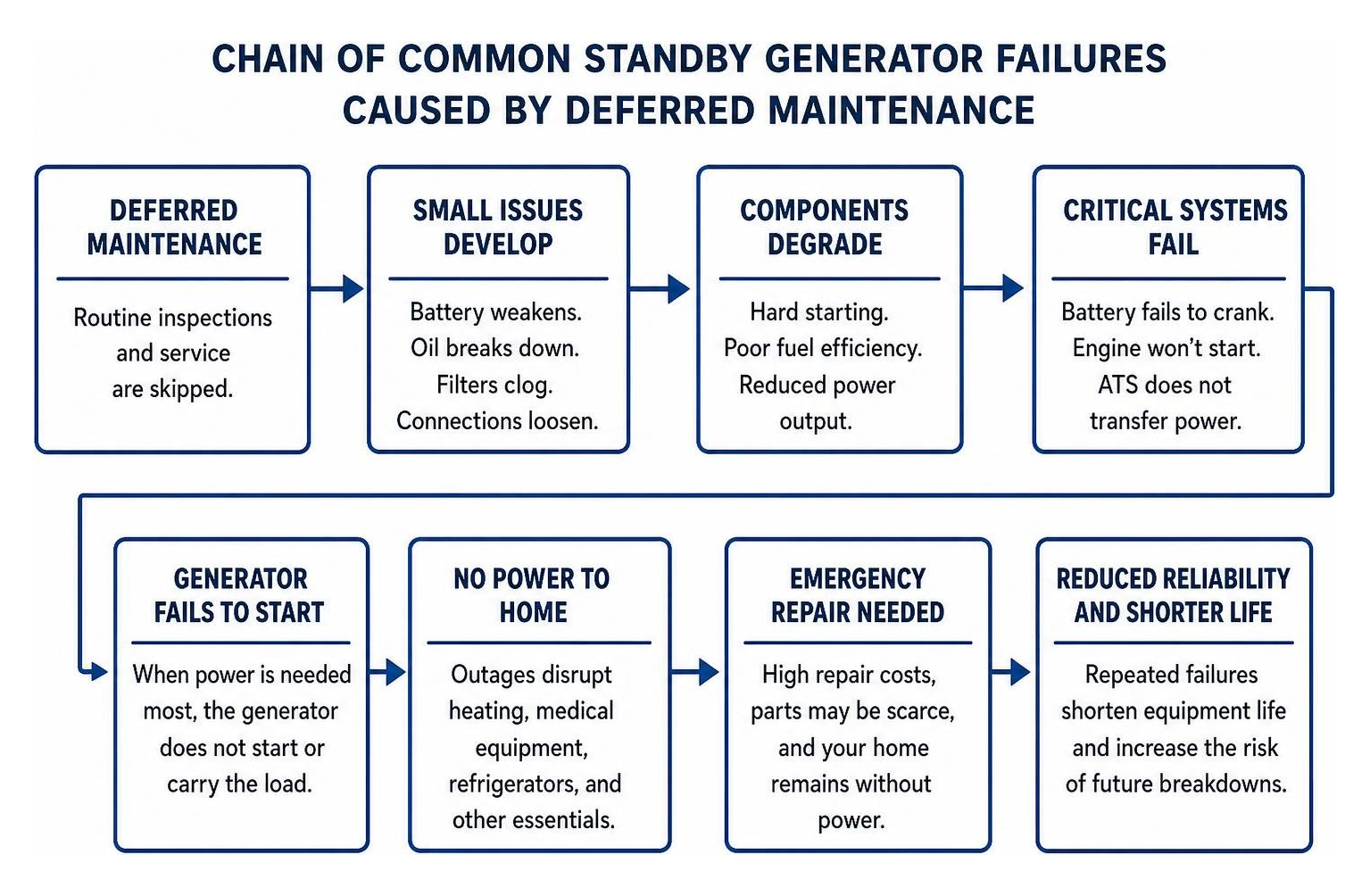
The most common culprit behind a failed start is a weak or dead starting battery. Standby units rely on a continuous trickle charger, but lead-acid batteries degrade over two to three years. Without periodic load testing and terminal cleaning, a battery can show an adequate resting voltage yet completely collapse under the heavy cranking load of an engine start.
Fuel degradation and component fouling present additional risks. Unchecked oil breaks down, losing its viscosity and accumulating corrosive combustion byproducts that wear down engine bearings. Air filters collect dust, dirt, and pest nesting material, starving the engine of combustion air.
Furthermore, deferred maintenance can lead to automatic transfer switch (ATS) malfunctions. Because the transfer switch interfaces directly with your primary service panel, worn internal contactors or loose terminals can prevent power from reaching your home, requiring comprehensive electrical panel services to resolve.
Comprehensive Checklist: What Happens During a Service Visit

A thorough service appointment goes far beyond changing the engine oil. Professional maintenance involves an exhaustive multi-point inspection that examines the mechanical engine, electrical generation systems, automatic transfer hardware, and safety controls.
Comprehensive generator maintenance evaluates every component that could compromise your system’s reliability.
Inspecting the Mechanical and Electrical Systems
During a scheduled service visit, technicians systematically inspect the entire system:
- Engine and Ignition: We inspect and replace spark plugs, set gap clearances, check valve lash clearances, and replace air and oil filter elements.
- Cooling and Airflow: Technicians clear cooling fins, examine ventilation louvers for obstructions, inspect hoses for dry rot, and ensure the engine operates within manufacturer-specified temperature ranges.
- Generator Alternator and Wiring: We inspect the stator, rotor, brushes, slip rings, and electrical terminals to ensure corrosion-free, secure connections.
- Automatic Transfer Switch Testing: Our team verifies proper ATS operation, cleans the cabinet, checks wiring harnesses, and simulates an outage to confirm seamless power transfer throughout your residential electrical network.
- Exhaust and Structural Housing: We inspect the exhaust muffler, tailpipe, enclosure latches, seals, and vibration mounts to eliminate safety hazards and reduce operational noise.
Testing Battery Health and Fuel Quality
The electrical starting system and fuel delivery network require specialized diagnostic testing:
- Battery Diagnostics: Technicians perform precision conductance testing, clean terminal posts of corrosive oxidation, verify proper charging voltage from the control board, and check electrolyte levels on unsealed batteries.
- Fuel System Evaluation: We inspect flexible fuel lines for micro-cracks or leaks, verify static and dynamic fuel pressure using a digital manometer, and check shutoff solenoid valves.
- Lubrication Management: Old oil is drained, fresh full-synthetic engine oil is added to manufacturer specifications, and the engine is run to verify pressure sensors operate accurately.
The table below outlines the core differences between routine seasonal inspections and comprehensive annual service visits:
| Maintenance Task | Semi-Annual Inspection | Comprehensive Annual Service |
|---|---|---|
| Engine Oil & Filter | Level & condition check | Complete drain and replacement |
| Spark Plugs | Visual inspection & gap check | Full replacement with new plugs |
| Air Filter Element | Clean debris & inspect | Replace with new OEM filter |
| Starting Battery | Voltage check & terminal clean | Full dynamic load / conductance test |
| Valve Clearance | Visual check if applicable | Precision lash measurement & adjust |
| Fuel Delivery & Lines | Leak inspection & visual check | Dynamic fuel pressure & regulator test |
| Transfer Switch (ATS) | Visual inspection & cleaning | Simulated power transfer & load test |
| Diagnostic Fault Codes | Scan, clear, and record history | Full firmware check, clear, & retest |
How to Determine Your Standby Generator Service Frequency
The right service schedule depends on how your backup power system is used. Standby generators experience wear from both active run hours during outages and passive aging while sitting on standby.
Factors determining your required service intervals include:
- Total Runtime: Generators require service after every 100 to 200 hours of continuous operation, as well as an annual baseline service even if no major outages occur.
- Local Climate Conditions: Freezing Inland Northwest winters and dusty summer conditions accelerate oil breakdown, battery degradation, and air filter clogging.
- Electrical Load Demands: Systems running near their maximum kilowatt capacity run hotter and require closer monitoring of valve clearances and alternator windings.
How Often Should You Schedule Generator Maintenance Service?
For most residential applications, we recommend a comprehensive service visit once a year, supplemented by a lighter semi-annual inspection. This schedule ensures the unit is tuned before winter freezes and checked again ahead of summer storm seasons.
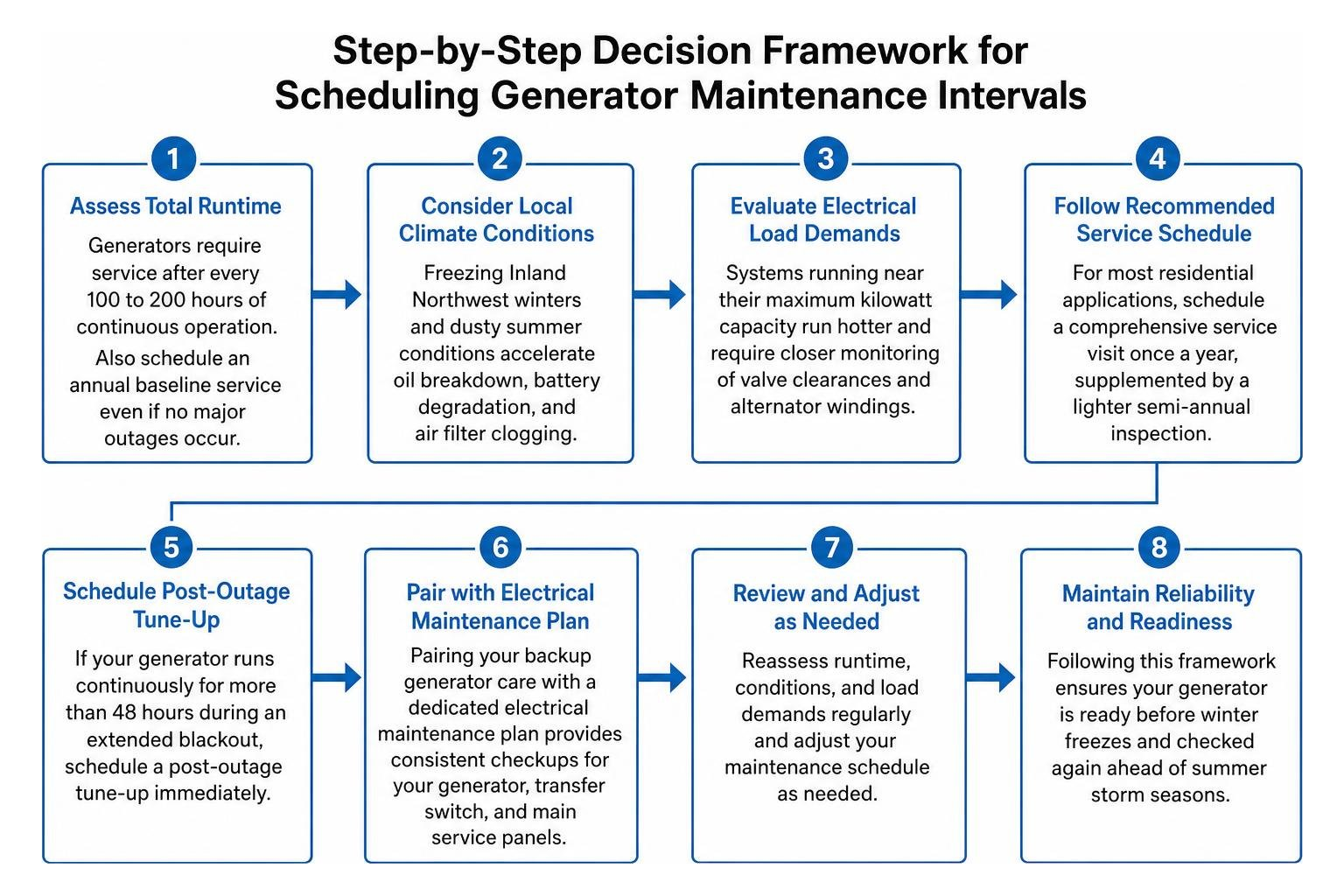
If your generator runs continuously for more than 48 hours during an extended blackout, schedule a post-outage tune-up immediately. Extended continuous runs consume oil and strain spark plugs. Pairing your backup generator care with a dedicated electrical maintenance plan provides consistent checkups for your generator, transfer switch, and main service panels.
Key Factors Influencing Maintenance and Repair Costs
When evaluating maintenance and service costs, several factors influence overall pricing:
- Generator Capacity (Kilowatt Rating): Larger liquid-cooled units (25 kW to 150 kW) require more oil, larger filters, and complex coolant systems compared to standard air-cooled residential models (10 kW to 24 kW).
- Age of Equipment: Older units may need specialized replacement parts, carburetor adjustments, or harness repairs that take additional diagnostic time.
- Site Accessibility: Units installed in tight side yards, steep grades, or beneath elevated structures may require extra labor to access and service safely.
- Diagnostic and Component Complexity: Repairing an electronic control board or rewinding an alternator stator requires advanced diagnostic tools compared to standard fluid and filter replacements.
- Installation Quality: A system set up through professional generator installation ensures proper clearances, accessible gas lines, and balanced electrical circuits, making ongoing maintenance faster and more affordable.
Frequently Asked Questions About Generator Maintenance
What are the most common signs that my standby generator needs immediate service?
Watch for startup hesitation, unusual grinding or rattling noises, visible fluid leaks (oil or fuel), yellow or black exhaust smoke, flickering lights during operation, or error lights illuminated on the digital control pad. If your unit misses its scheduled weekly exercise cycle, have it inspected right away.
How does routine maintenance protect my generator manufacturer warranty?
Manufacturers require regular maintenance using approved parts and fluids to keep warranties valid. Keeping detailed service invoices from certified technicians proves that your generator was operated according to manufacturer specifications, ensuring warranty claims are honored if a covered component fails.
What steps should homeowners take between professional maintenance visits?
Homeowners should perform a monthly visual check:
- Ensure the surrounding perimeter has at least 3 to 5 feet of clear space, removing weeds, snowdrifts, leaves, and debris.
- Verify the exterior status light shows green (ready mode).
- Check that the intake and exhaust louvers remain free of rodent nests or insect screens.
- Listen for its automated weekly exercise cycle to confirm it starts and runs smoothly.
If you notice warning alerts, fluid spots, or irregular running sounds, reach out through our contact us page to have a technician inspect your system.
Conclusion: Keep Your Home Powered with Dependable Maintenance
A standby generator protects your home, your family’s comfort, and essential appliances when severe weather strikes. But backup power is only as dependable as the maintenance behind it. Regular inspections, proactive battery replacements, and timely oil changes ensure your generator starts instantly when the grid fails.
At ACI Northwest, we have served homeowners and businesses throughout the Inland Northwest since 1992. Our licensed technicians provide thorough diagnostic inspections, routine servicing, and emergency repairs to keep your power running year-round. As Lowe’s selected heating and cooling partner, we deliver prompt, professional care you can count on.
Do not wait for a winter blizzard to discover a dead battery or clogged fuel line. Contact our team today to schedule service and ensure your generator is ready for the next power outage. For complete home comfort, electrical safety, and heating reliability, rely on our comprehensive HVAC and electrical services in Coeur d’Alene, ID.