Choosing Automatic House Generators for Your Home
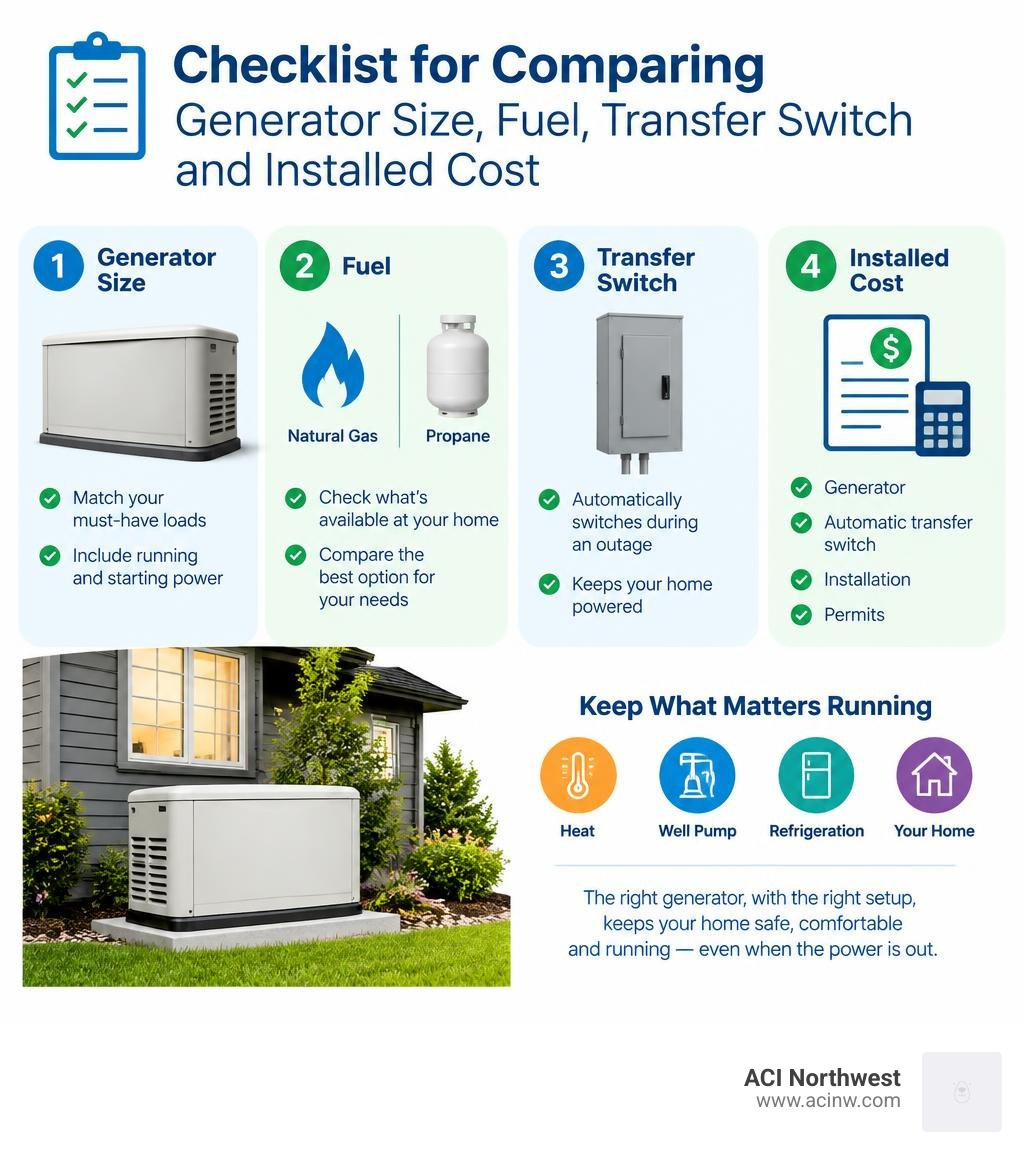
The right automatic house generator powers the systems you need during an outage without making you pay for more capacity than you will use. Start by listing must-have loads, such as heat, a well pump, and refrigeration. Then have an installer check both their running power and the extra power motors need to start. Compare natural gas and propane based on what is available at your home, and get a quote that includes the generator, automatic transfer switch, installation, and permits.
An automatic transfer switch lets a standby generator take over when utility power fails. That can matter during a North Idaho winter, when a long outage may put heat and pipes at risk.
I’m Bill Radobenko, president and CEO of ACI Northwest in Coeur d’Alene. More than two decades leading electrical and home service teams across the Inland Northwest shape my approach to choosing automatic house generators.
Severe weather events have pushed electrical grids to their breaking points across the nation. In January 2026, Winter Storm Fern knocked out power to more than 1 million customers across the South, leaving some households without electricity for six or more days. In September 2024, Hurricane Helene cut service to 4.79 million customers across the Southeast, where restoration stretched past two weeks in remote communities. Shortly after, in October 2024, Hurricane Milton triggered widespread cycling grid failures for 3.4 million Florida utility customers.
When utility lines collapse under ice or high winds, an automated backup power system ensures your household never misses a beat.
How Automatic House Generators Work During Power Outages
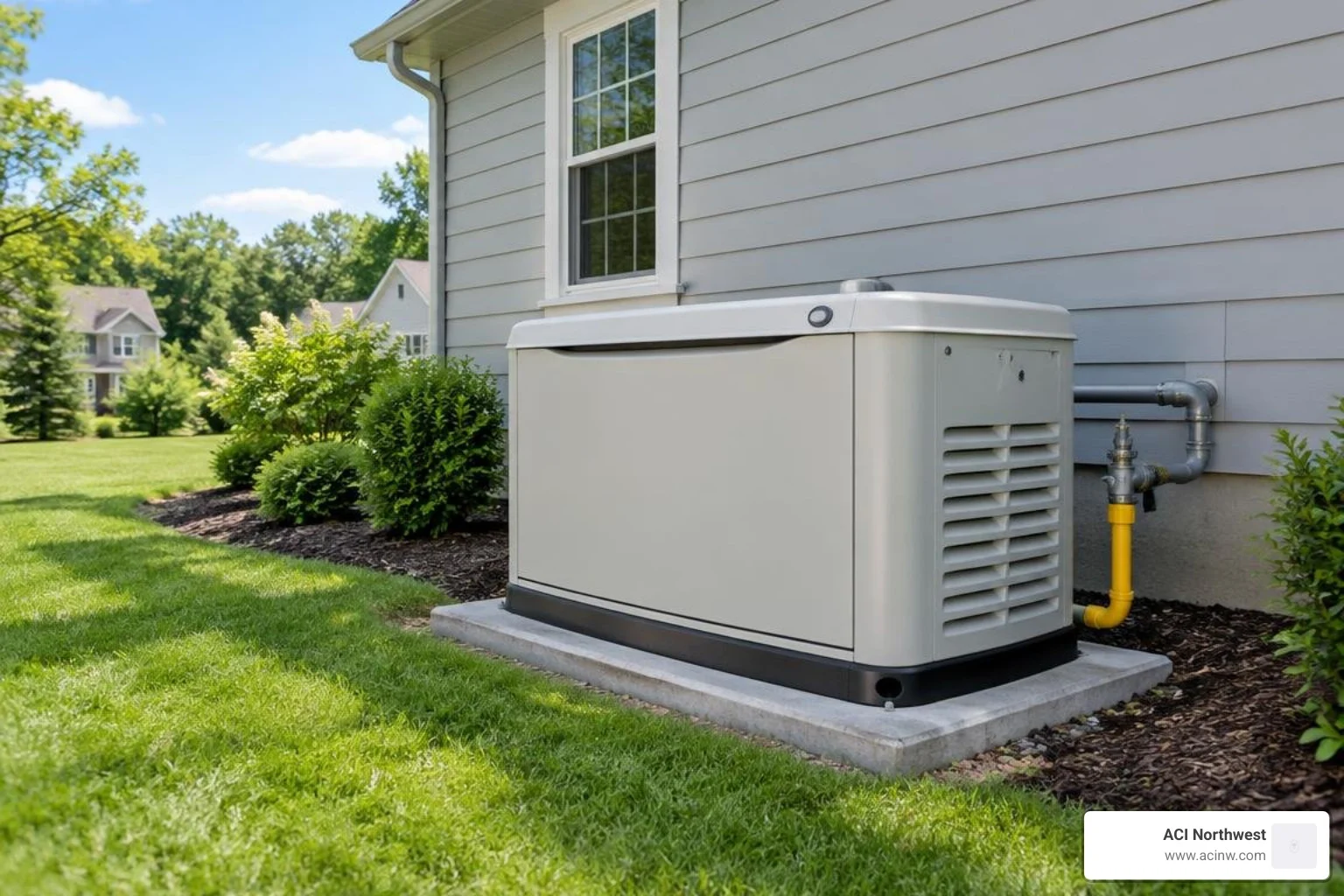
Unlike portable units that force you out into freezing storms to haul gasoline cans and connect extension cords, permanent standby backup generators operate independently. They continuously monitor incoming voltage from the utility lines. When severe weather interrupts grid power, the system initiates a seamless transfer sequence to restore electricity throughout your living space within seconds.
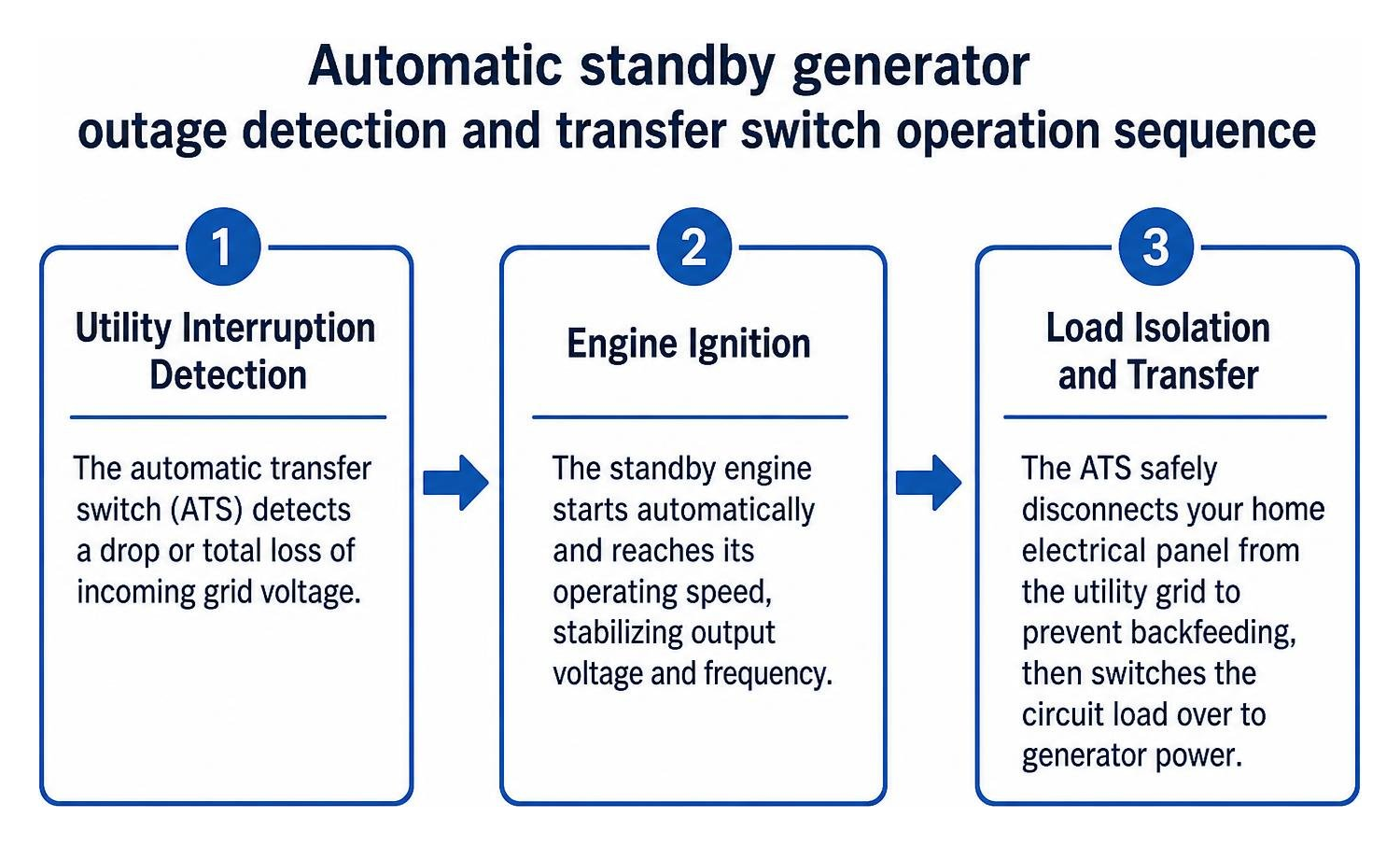
The process relies on a precision sequence designed to protect both your household electronics and utility workers repairing lines down the street:
- Utility Interruption Detection: The automatic transfer switch (ATS) detects a drop or total loss of incoming grid voltage.
- Engine Ignition: The standby engine starts automatically and reaches its operating speed, stabilizing output voltage and frequency.
- Load Isolation and Transfer: The ATS safely disconnects your home electrical panel from the utility grid to prevent backfeeding, then switches the circuit load over to generator power.
- Grid Restoration Monitoring: When utility lines come back online, the system monitors the grid to ensure voltage is steady before transferring your home back to utility power.
- Engine Cool-Down: The generator runs through a brief cool-down cycle before shutting down, returning to standby mode.
This hands-free transition keeps essential medical equipment running, prevents frozen plumbing lines, and eliminates food spoilage without manual intervention.
Key Components of an Automatic Standby System
A complete standby power setup includes several integrated mechanical and electrical assemblies:
- Engine and Alternator Assembly: Air-cooled engines (commonly used for units up to 28 kW) or liquid-cooled engines (for larger estates) generate clean electricity.
- Automatic Transfer Switch (ATS): Usually rated at 200 amps for whole-home setups, the ATS safely manages the flow between utility power and backup generation.
- Smart Mobile Monitoring: Integrated wireless controllers run routine self-diagnostics and send real-time system status alerts to your smartphone.
- Subpanel Integration or Load Shedding Modules: Intelligent load management modules temporarily pause high-draw appliances (like central AC units) during generator startup to prevent engine bog-down.
Fuel Types and Sizing for Whole-House Backup
Selecting the right power rating requires calculating both continuous running wattage and initial starting surges. Electric motors—such as those found in heat pumps, air conditioning compressors, well pumps, and refrigerators—require two to three times more power to start than they do to remain running.

Planning your energy layout when designing or upgrading your home makes sizing your backup equipment much simpler. If you are drafting a custom floor plan or planning a remodel, services like Generate Detailed House Plans Automatically: Design Your Dream Home in Minutes can help you map out mechanical rooms, utility access, and fuel line routing early in the process.
Fuel Options for Automatic House Generators: Natural Gas vs Propane
Standby generators run on continuous utility natural gas, dedicated liquid propane tanks, or on-site diesel reservoirs.
| Feature | Natural Gas (NG) | Liquid Propane (LP) | Diesel Fuel |
|---|---|---|---|
| Fuel Supply | Continuous municipal pipeline | On-site pressurized storage tank | Dedicated on-site storage tank |
| Energy Density | Moderate (~1,000 BTU/cu ft) | High (~2,500 BTU/cu ft) | Very High (~138,500 BTU/gal) |
| Outage Runtime | Virtually unlimited | 120 to 250 hours (500–1,000 gal tank) | Limited by tank capacity |
| Fuel Maintenance | None required | Periodic tank inspections | Fuel stabilizers and filter cycling |
| Cold Weather Reliability | Excellent | Requires proper tank pressure | Needs cold-flow anti-gel additives |
| Ideal Application | Urban and suburban properties | Rural and off-grid properties | Large rural acreage and commercial |
Natural gas offers the convenience of an uninterrupted fuel supply, while liquid propane provides higher energy density for properties without municipal gas access.
Sizing Automatic House Generators for Essential vs Whole-Home Loads
For single-family homes, automatic house generators typically range from 10 kW to 28 kW. Deciding between essential circuit coverage and whole-home power depends on your total electrical demands:
- 10 kW to 14 kW Units: Ideal for powering essential circuits, including refrigeration, gas furnaces, lighting, internet routers, and basic kitchen appliances.
- 18 kW to 24 kW Units: The most popular range for 2,000 to 2,500-square-foot homes, capable of running central HVAC systems, electric water heaters, and well pumps simultaneously.
- 26 kW to 28 kW Units: Designed for larger residences with multiple high-tonnage heat pumps, electric ranges, and high-draw shop equipment.
Costs, Installation, and Safety Standards
A proper standby generator installation involves structural site preparation, dedicated high-voltage electrical work, and mechanical fuel line plumbing.
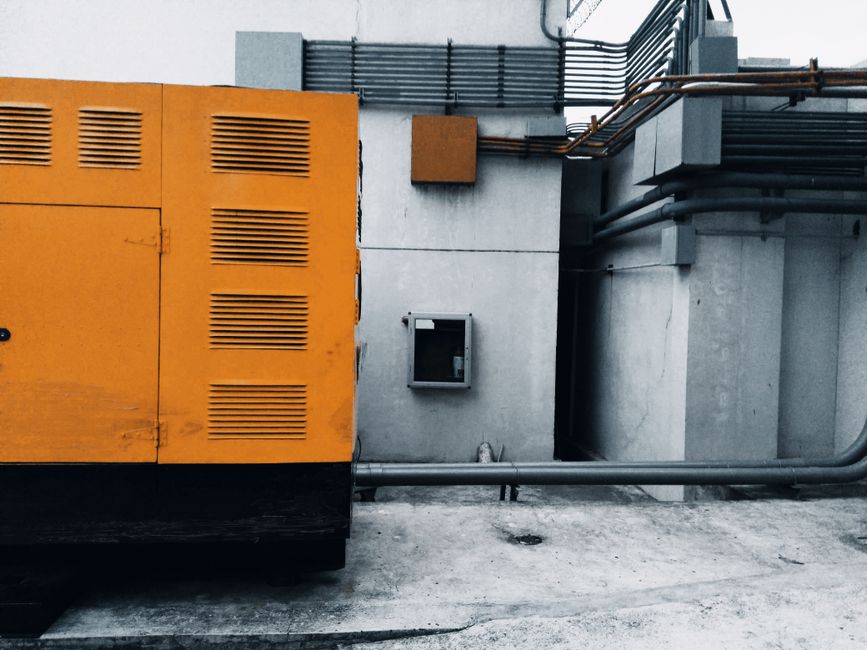
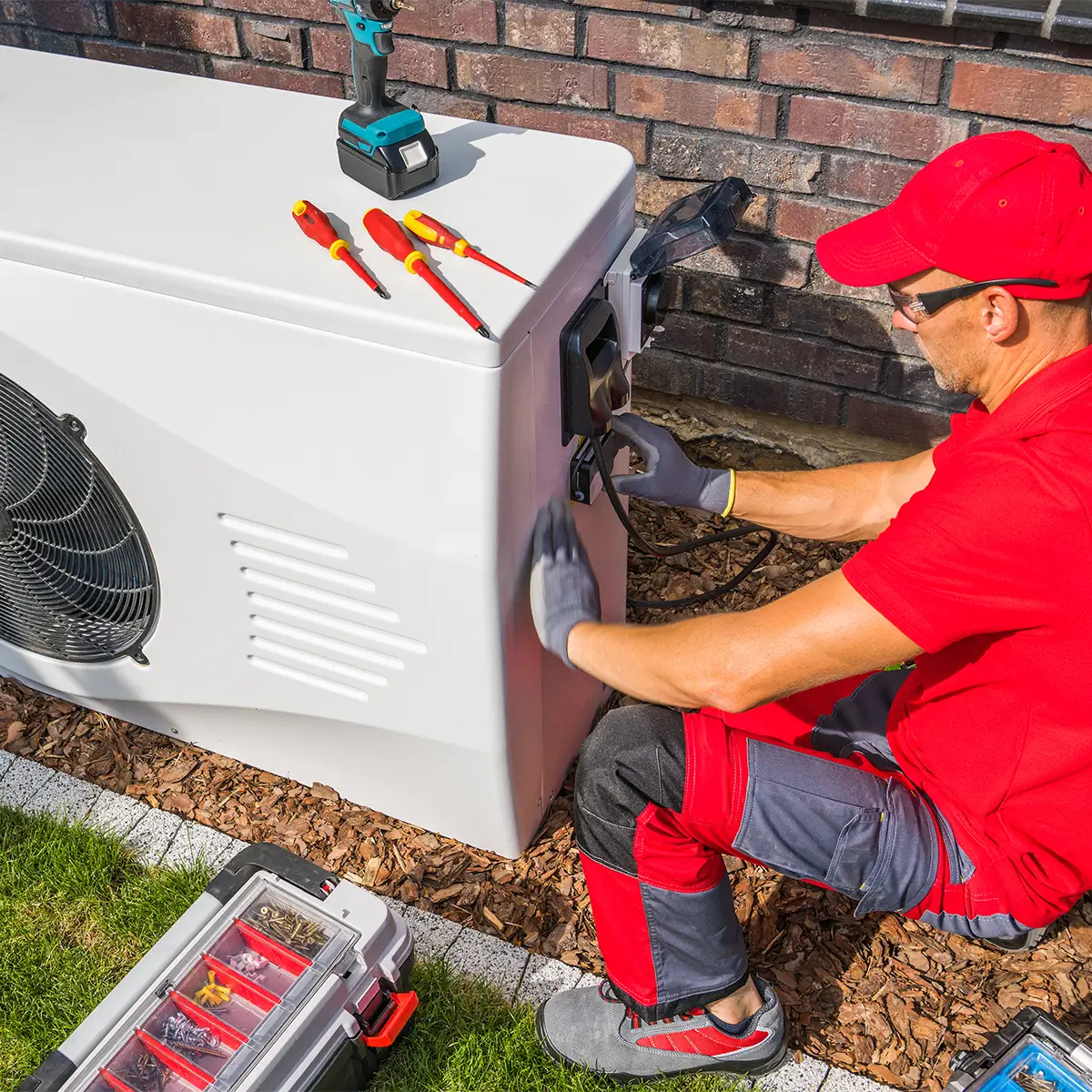
Due to the complex electrical connections and municipal codes involved, partnering with licensed technicians for professional generator installation services ensures that your system functions reliably when an outage occurs.
Total Investment: Equipment, Labor, and Ongoing Maintenance
The total price of a whole-house generator system includes the equipment, the transfer switch, permitting, and labor:
- Equipment Costs: Air-cooled residential units generally run between $3,699 for entry-level 10 kW models up to $9,319 or more for high-output 28 kW models equipped with 200-amp smart transfer switches.
- Installation and Permitting Labor: Professional mechanical and electrical installation typically adds $2,000 to $4,000, depending on electrical panel capacity and gas line distance.
- Routine Maintenance: Budgeting for regular preventative generator maintenance protects your engine through periodic oil, spark plug, and filter replacements, helping you avoid costly emergency generator repair during critical winter storms.
Carbon Monoxide Safety and Placement Regulations
Standby generators produce exhaust containing carbon monoxide (CO), an odorless, colorless gas. The Consumer Product Safety Commission (CPSC) emphasizes that stationary generators require strict clearance planning:
- Setback Distances: The CPSC recommends installing standby generators 25 feet away from exterior home walls and at least 25 feet away from neighboring structures whenever property dimensions permit.
- Ventilation Clearances: Units must never be placed beneath overhangs, near operable windows, or adjacent to dryer, soffit, or crawl space vents where exhaust could migrate indoors.
- Interior Protection: Install UL 2034 certified carbon monoxide detectors on every level of the home and near all sleeping areas.
When planning property additions or structural renovations, tools like House Plans – Design Floor Plans, Walls, Roof & Siding with Full Blueprint Export | RedX Apps make it simple to calculate safe setback distances and exterior clearances on your property blueprints.
Weighing the Pros, Cons, and Long-Term Value
Installing a permanent standby generator represents a substantial home investment that delivers dependable convenience:
Advantages:
- Instant, Hands-Free Operation: Automatically restores electricity within seconds of an outage.
- Damage Prevention: Keeps sump pumps operating during heavy rainfall and maintains interior heat to prevent burst pipes during deep freezes.
- Continuous Lifestyle Comfort: Eliminates spoiled groceries, powers home offices, and protects temperature-sensitive medications.
- Property Appeal: Permanently installed backup power systems often enhance overall property value and marketability.
Considerations:
- Initial Investment: Upfront equipment and installation costs exceed those of portable generators.
- Site and Code Requirements: Demands dedicated exterior yard space, utility permits, and routine servicing.
Understanding the direct reasons whole house generators are a great investment helps homeowners weigh upfront costs against long-term property protection. Knowing why a whole house generator protects the family provides genuine peace of mind during harsh seasonal weather.
Frequently Asked Questions About Home Generators
What size generator is needed to power a 2,000-square-foot house?
A 2,000-square-foot home typically requires a 20 kW to 24 kW standby generator to power central heating and air conditioning, refrigeration, lighting, well pumps, and everyday electronics simultaneously without overloading the system.
Do you need a permit to install a home standby generator?
Yes. Installing a standby generator requires both electrical and mechanical/plumbing permits to ensure compliance with local building codes, National Electrical Code (NEC) standards, and utility safety regulations.
How often does an automatic whole-house generator need maintenance?
Standby generators automatically run a short self-test cycle weekly to keep internal components lubricated. In addition, an annual professional service—including engine oil changes, air and oil filter replacements, spark plug checks, and battery testing—is recommended to maintain peak reliability.
Conclusion
Severe weather and aging electrical grids make dependable backup power essential for maintaining home safety and comfort. Investing in the right standby generator setup protects your property from costly freeze damage, keeps critical medical systems running, and eliminates outage-related stress.
At ACI Northwest, we have served homeowners across Coeur d’Alene and the Inland Northwest since 1992. Our licensed electricians and mechanical specialists are ready to help you size, install, and maintain the perfect backup power system for your property. Explore our selection of high-performance transfer switches and generator solutions to safeguard your home against unexpected outages today.