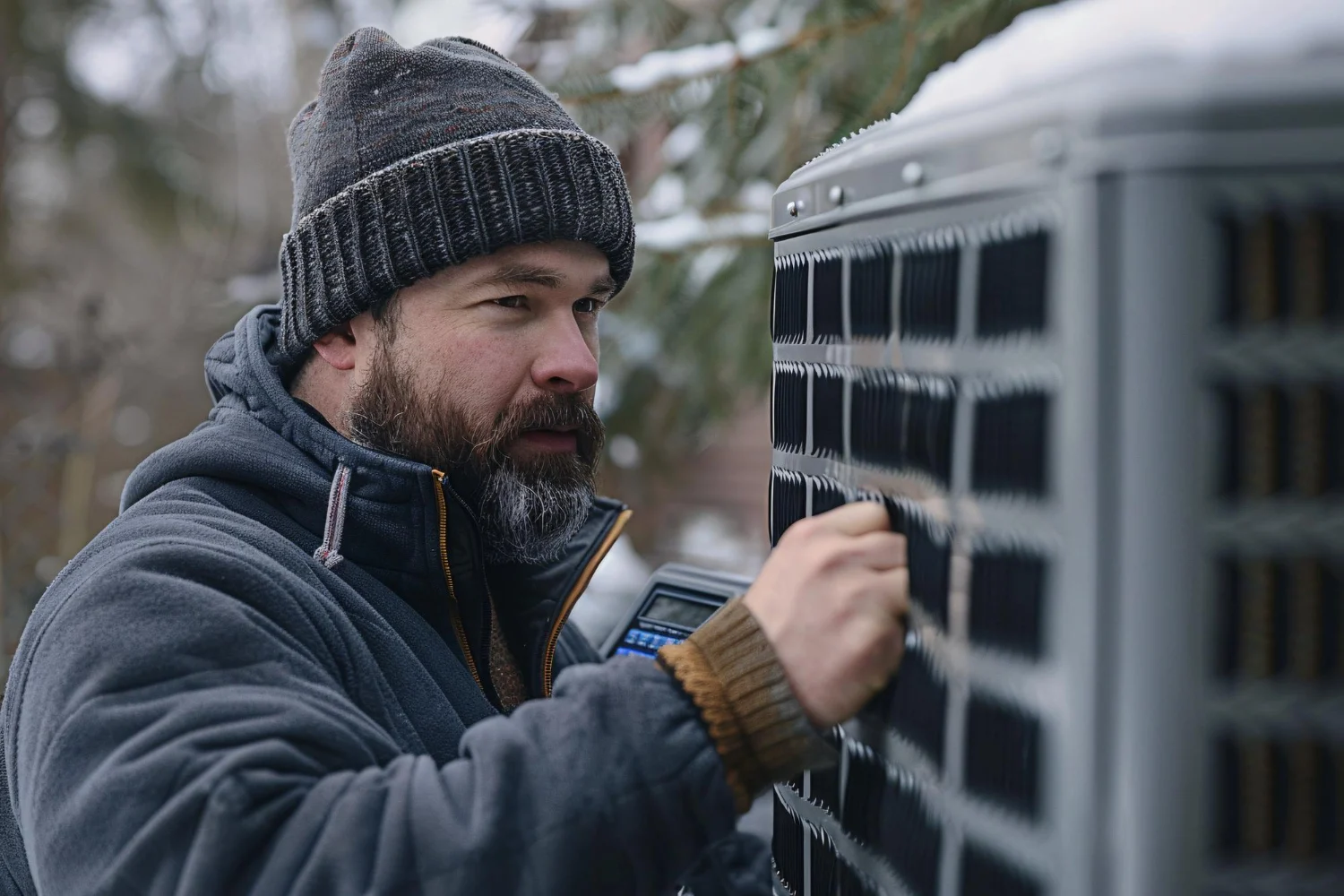
If you’re thinking about a heat pump for your home in Spokane, Coeur d’Alene, or anywhere in between, the first question is usually the same: will it keep up in January? For most homes in the Inland Northwest, the answer is yes, as long as you choose the right equipment and have it installed correctly. Modern cold-climate heat pumps are built for winters like ours. The reputation heat pumps have for struggling in the cold mostly comes from older equipment.
How Cold Do Our Winters Get?
January lows in Spokane and Coeur d’Alene usually sit in the low to mid 20s. That means most winter nights fall in a range where a modern heat pump runs comfortably and efficiently.
The harder test is the cold snap. In January 2024, Coeur d’Alene dropped to 13 below zero during a stretch of subzero mornings, and Spokane saw the same arctic air. A heat pump for our area should be chosen with those nights in mind, not just the averages.
How a Heat Pump Makes Heat When It’s Freezing Outside
A heat pump doesn’t burn fuel. It moves heat from the outdoor air into your home, the same way your refrigerator moves heat out of its interior. Even at 0°F, outdoor air still holds heat that a heat pump can pull inside.
As temperatures drop, there’s less heat to collect, so the system works harder and puts out less heat for each unit of electricity it uses. The difference between a standard heat pump and a cold-climate model is how much heating capacity it keeps as the temperature falls.
What a Cold-Climate Heat Pump Can Do
Cold-climate heat pumps use variable-speed compressors designed to keep producing heat in deep cold. A few benchmarks help put that in perspective:
- Mitsubishi Electric Hyper-Heat systems are rated to deliver their full heating capacity down to 5°F and to keep heating down to 13 below zero.
- ENERGY STAR Cold Climate certified heat pumps must still deliver at least 70% of their rated heating capacity at 5°F, while producing at least 1.75 units of heat for every unit of electricity. Standard electric baseboard or furnace heat strips produce one unit of heat per unit of electricity.
One tip when you’re shopping: ask whether the specific model is ENERGY STAR Cold Climate certified. Most major brands sell both standard and cold-climate models, and the label on the box doesn’t always make the difference obvious.
ACI Northwest installs cold-climate systems from brands we know well, including Mitsubishi Electric, where we’re a Diamond Contractor, and Lennox, where we’re a Premier Dealer.
What to Expect on the Coldest Nights
A heat pump behaves differently from a furnace, and some of that is easy to mistake for a problem. Here’s what’s normal during a cold stretch:
- Longer run times. Heat pumps often run steadily at a lower speed instead of cycling on and off. Running for hours on a cold day is normal.
- Defrost cycles. Frost builds up on the outdoor coil in cold, damp weather, so the system periodically reverses to melt it off. You may see steam rising from the outdoor unit and notice a short pause in warm air. Both are normal.
- Backup heat. Many systems have a backup heat source, either electric heat strips or a gas furnace, that helps out during extreme cold or a defrost cycle. Backup heat costs more to run, so you want it working only when it’s needed.
It’s time to call a technician if the outdoor unit stays covered in ice that won’t clear, your home can’t hold the temperature you’ve set, the system seems to run on backup heat all the time, or you hear grinding or rattling. Our heat pump repair team works on all major brands.
Heat Pump Only, or Dual Fuel?
For many homes in our area, the best answer is a mix. A dual-fuel system pairs a heat pump with a gas furnace. The heat pump handles most of the heating season, and the furnace takes over automatically when the outdoor temperature drops below a set point.
Dual fuel is often a good fit if:
- Your home already has natural gas service
- You have an older or larger home that loses heat quickly on the coldest nights
- Your current furnace still has good years left and you’re replacing an aging air conditioner
A heat pump on its own often makes sense if:
- Your home is newer and well insulated
- You don’t have natural gas available
- You’re heating an addition, garage, or bonus room that isn’t on your ductwork, where a ductless mini-split can heat the space without new ducts
Sizing and Installation Matter as Much as the Equipment
Even a top-rated cold-climate heat pump will disappoint if it isn’t sized and installed correctly. A system that’s too small leans on expensive backup heat. One that’s too large turns on and off too often, which wears out parts and leaves rooms uneven.
A proper installation starts with a load calculation for your home, including square footage, insulation, windows, and the design temperatures for Spokane or North Idaho. From there, a few details make a big difference in our winters:
- Ductwork. Heat pumps often need different airflow than an older furnace. ACI builds custom ductwork in our own sheet metal shop, so we can modify ducts as part of the job.
- Outdoor unit placement. The outdoor unit should sit on a stand or pad above the typical snow line and away from roof edges where snow and ice slide off.
- Backup heat settings. On a dual-fuel or heat-strip system, the switchover temperature should be set for your home and your energy costs, not left at a factory default.
Thinking About a Heat Pump for Your Home?
ACI Northwest has served homeowners in Spokane, Spokane Valley, Coeur d’Alene, Post Falls, and the surrounding communities since 1992. We’ll look at your home, talk through whether a heat pump on its own or a dual-fuel system makes more sense, and give you a straightforward recommendation.
Financing is available from 12 months same as cash up to 120 months, subject to approved credit. Call us at (509) 482-2000 in Washington or (208) 772-9571 in Idaho, or request a custom estimate online.