Does Humid Air Affect How AC Runs in Spokane County Homes?

February 22nd, 2012

As a Spokane County resident you’ve probably heard a dozen times that humidity is removed by air conditioning. Unfortunately, the common assumption is that there is no inherent cost in allowing humidity to persist in their home. But, did you know it costs significantly more to remove humidity from the air with air conditioning than with a dehumidifier? Here’s why.

Water Vapor in Your Air Conditioner

Consider the amount of energy it takes to raise the temperature of water by one degree – one BTU. However, to change water from liquid to steam, another 10 BTUs are required. So, imagine how much energy it takes to condense water vapor from the air (in the form of humidity) into a liquid. This is what your air conditioner does whenever it processes humid air. It takes about 1,050 BTUs to condense one pound of moisture in the air into liquid.

The cost of running your air conditioner strictly for dehumidification can be huge, especially considering the fact that humidity is heaviest in the morning and evening when you probably don’t need your air conditioner every day (at least not early and late in the summer). Imagine, the cost difference if you used a dehumidifier to remove 150 or more pounds of moisture per week and an air conditioner when needed just to remove 15-20.

Negative Impact on How it Runs

Another thing to consider is that humidity can actually put an extra burden on your air conditioner. While the system is designed to remove that liquid from the air and get rid of it through the cooling coil and condensate drain, every extra minute the system is running is a bigger burden on it. Of course it will do its job for a few years, but the extra running time will add up, not only on your electricity bill but eventually on the machine itself.

The added pressure will result in eventual breakdown of the system and a need for early air conditioner replacement. The easiest solution is to purchase a dehumidifier. These run at a fraction of the energy level of a full AC system and work extremely well to remove humidity from your home. In fact, most air conditioners will only remove humidity after 20-30 minutes of continuous operation. For short cooling cycles, you may not even dehumidify the house. So a dehumidifier ensures higher levels of comfort all at a lower cost.  Please contact ACI NW if you have questions about this.

Common Air Conditioner Problems in Airway Heights

February 17th, 2012

Air conditioners are an important part of our lives here in Airway Heights. They keep us comfortable despite overbearing heat and humidity outside all summer, but because they run constantly for months and because they are such complicated pieces of machinery, they are prone to a number of problems. Here are some of the most common problems you’re likely to run into with an air conditioner and how to solve them:

Leaks

A common problem that many people ignore or are unaware of is refrigerant leakage. It is possible that when the system was installed, it wasn’t properly charged, but most of the time if your system is low on refrigerant, it is because of a leak. You can’t just pour more refrigerant in and call it good, though.

The leak needs to be fixed, both for health and environmental reasons. If you notice that your system is low on refrigerant or you smell something off – often like acetone, call a professional immediately for inspection and repair.

Sensors

An air conditioner doesn’t do you any good if the sensors don’t work properly. Improperly working sensors will fail to properly read the temperature in the home or from your thermostat. So, it might be 80+ degrees in your home but if the thermostat reads it as 72, the system won’t turn on. The air conditioner itself probably still works fine, but unless it can successfully read the temperature, you won’t get the cooling you need to stay comfortable.

Check first to see if the sensor was moved or knocked toward the evaporator coil (which will keep the temperature reading low).

Drainage problems

Your air conditioner acts as a dehumidifier as well, producing a liquid known as condensate. This liquid usually drains from the air conditioner into a designated area away from your home. However, if the condensate drain gets clogged or if the system wasn’t properly installed, that condensate can start to build up in your home. If you notice leakage around the coils, you may need a pump to remove the condensate properly.

Properly maintaining your air conditioner can usually be done with regular maintenance each year, but if one of these problems pops up, call a professional and get them fixed right away.  If you have any questions about this please contact ACI NW.

Happy Valentine’s Day From Your Coeur d’Alene HVAC Pros at ACI NW!

February 14th, 2012

Everyone at ACI NW wishes you a Happy Valentine’s Day! Valentine ’s Day is all about showing your appreciation for your loved ones. Whether it is your significant other, your family, or your friends, today is a great day to let them know how special they are to you. A handmade card, a bouquet of flowers, or even a simple phone call can make someone’s whole day.

If you are thinking about a big gift for your family, an upgrade to your HVAC system might not be the most romantic gift, but it is a gift that keeps on giving! An air filter will keep you indoor air clean, and a new furnace or heat pump will make your home more comfortable and lower your utility bills. Making your home cozier is something your whole family will appreciate!

Call ACI NW to learn more about how some HVAC system upgrades improve the comfort level in your home. And to make your Valentine’s Day a little sweeter, here is a recipe for Chocolate Covered Strawberries

INGREDIENTS:

16 ounces milk chocolate chips

2 tablespoons shortening

1 pound fresh strawberries with leaves

DIRECTIONS:

  1. Insert toothpicks into the tops of the strawberries.
  2. In a double boiler, melt the chocolate and shortening, stirring occasionally until smooth. Holding them by the toothpicks, dip the strawberries into the chocolate mixture.
  3. Turn the strawberries upside down and insert the toothpick into styrofoam for the chocolate to cool.

For more details, visit allrecipes.com.

Kellogg Heating Q/A: What Exactly Are High Efficiency Boilers?

February 13th, 2012

As a Kellogg resident you have already read plenty about how energy costs are rising. You know plenty well that heating your home is a substantial expense, and that the cost of running a boiler is constantly on the rise. That whole array of topics has been more than adequately covered.

So rather than spend more time telling you what you already know, this post is about one of the solutions to combat the high costs of home heating: high efficiency boilers. As technology has gotten better, so have boilers become more efficient at providing heat. It stands to reason that a more efficient boiler is one that costs less to run…but what does “efficient” really mean in the context of boilers? What makes a boiler “high efficiency”?

What Is a High Efficiency Boiler?

All boilers are rated according to a standardized system of rating efficiency, called the Annual Fuel Utilization Efficiency (AFUE). Essentially, this rating tells you how much heat energy is produced by a boiler compared to how much energy it draws. The higher a boiler’s AFUE rating, the more efficient it is.

For a boiler to be called high efficiency, it must carry an AFUE of at least 90%. For basis of comparison, older systems carry an AFUE of about 70%, while mid-efficiency systems run at about 82%.

In addition, a high efficiency system has a second heat exchanger for capturing and condensing flue gases, as well as a closed combustion system.

These three things — an AFUE of 90% or above, condensing flue gases and closed combustion – define a so-called “high efficiency” boiler.

Getting More Efficient

To go the high efficiency route, the most obvious option is to replace your current boiler with a high efficiency unit. But what if you have a fairly new boiler that is not ready to be replaced yet?

In that case, you can retrofit your existing boiler with high efficiency equipment. It won’t be quite the same as getting a top-of-the-line high efficiency boiler, but it will produce high efficiency results without costing as much.

The initial investment in a high efficiency boiler can be costly, but the savings over time in heating bills make it well worth the expense.  Call ACI NW with any questions about boilers.

Understanding the Heat Pump Defrost Cycle: A Guide from Greenacres

February 10th, 2012

If your Greenacres home has a heat pump, you’ll want to understand the defrost cycle to help you maintain your heat pump and troubleshoot repairs. While this is a basic guide, you should call a qualified HVAC technician if you experience major issues with your heat pump.

During the winter when a heat pump is heating your home, the cooler outdoor air that’s pumped in and heated may have excess moisture. The outdoor coil evaporates this moisture, but under certain weather conditions, frost can accumulate on the coil and decrease the overall efficiency of the heat pump.  To help reduce the potential for damage from the frost, heat pumps are manufactured with a defrost cycle to melt the frost from the outdoor coil. The defrost cycle occurs often during heavy frost conditions, so check weather reports if your defrost cycle seems to be running often.

At the beginning of the defrost cycle, the heat pump switches to the cooling mode and temporarily warms up the outdoor coil until it reaches somewhere around 60° F to melt the frost from the coil. To increase the temperature of the coil, the outdoor fan is prevented from turning on until the outdoor coil reaches the desired temperature. Weather conditions and the timing device both affect the amount of time it takes for the heat pump to move through the entire defrost cycle.

In older homes, electric heating pumps are sometimes installed to prevent cool air from being distributed throughout the home. This element will turn on with the defrost cycle and shut down the blower fan inside the house. If you have an older heat pump, you may want to consider upgrading to a more efficient model.

Call ACI NW any time if you have questions about the defrost cycle for the heat pump in your Greenacres home.

How Often Should I Replace My Furnace Filter in Coeur d’Alene?

February 6th, 2012

Just like the filter in your air conditioner, replacing your furnace filter is the key to a healthy and comfortable Coeur d’Alene home. By keeping a good filter replacement schedule, you will reduce wear and tear to the furnace and keep your home warm, while keeping your family healthy and controlling energy costs all winter.

But when does your furnace filter need to be changed? Well, each system is different, but there are some general guidelines and recommendations to follow that can help you keep it all straight and stay on top of your furnace filter situation.

Conventional Wisdom

The long-standing rule of thumb on furnace filters is to change them every month. This is good practice if you are using older fiberglass filters, but for newer, more efficient filters, you should do it a little differently. These should be inspected and cleaned at least once a month, but you may need to replace them that frequently also.

Sometimes it is a little more complicated than these general guidelines, so it pays to be aware of some factors and conditions in your home that may affect how frequently you need to change your filter.

Things to Consider

As mentioned above, the first thing to consider is the efficiency of the filter. Because new filters are so efficient, when they get dirty or clogged with dust and debris, they actually restrict airflow, making your furnace bog down and work harder. So, it is important to stay on top of a monthly inspection and cleaning schedule with these filters.

Also take into account indoor air quality and sources of allergens both inside and outside your home. If you live in an area with a lot of pollutants in the air, you’ll want to replace your filters often to keep those out of your home. If you own a lot of pets, the dander and hair will wind up in your furnace filter and you may have to replace it more often.

Complicated enough for you? It doesn’t have to be. Simplify the whole process by doing the following: check your filter monthly and be prepared to change it that often, clean high-efficiency filters regularly, replace the filter at least every three months and again at the start of heating season.

If you do those things at a minimum, you will be in pretty good shape.

Things Your Air Filter Can’t Filter in Mead

February 3rd, 2012

Air filters are great to have in your Mead home. Many people who own air filters, especially those who suffer from allergies or asthma, swear by them as being very beneficial to their health and general well-being. They help you feel comfortable knowing that your air is clean and fresh.

But how confident should you be in your air filter? Is there anything your air filter is missing? Can you be sure that your air is as clean as can be?

Well, all air filters have limitations, and many do particularly well at trapping and removing certain types of air pollutants, but at the expense of letting others pass. What your air filter can and cannot do depends on what kind of equipment you have.

A conventional air filter, like the pleated kind you may have in your air conditioner, is designed to trap particles in the air. Pollen, dust, dander and other small but solid pollutants and irritants get trapped in their close-knit fibers. The thing to pay attention here is the filter’s HEPA rating—the higher it is, the smaller the particles it can trap. So, if you are using a lower rated filter, you may be trapping pollen but still breathing in smoke particles. Also, sometimes large, heavy particles settle before reaching the filter and can’t be trapped.

A less common option is the gas-phase air filter. As you may guess from the name, these filters are meant to filter out harmful gases in the air. They do not trap particles and usually have a short life, so they need to be replaced frequently.

In addition to filters, there are other air cleaning options like ultraviolet germicidal (UVG) lights and photocatalytic oxidation (PCO) cleaners. PCOs are meant to filter out harmful gases, but have limited use in homes. UVG lights use radiation that is harmless to people but deadly to microorganisms to pure air of bacteria and other pathogens.

In sum, if you are concerned about the quality of the air in your home, the best strategy is probably to use multiple solutions, such as a combination of an air filter and UVG lights, in order to get rid of as many pollutants as possible. Keep in mind, though, that no system is perfect in keeping everything out of your air.

Heat pump maintenance in Spokane County

February 1st, 2012

Heating and cooling your Spokane County home is a priority. You need your home and family to be comfortable all year round, so you either got or are considering a heat pump. These machines are great because under the right circumstances, they are essentially all-inclusive and incredibly efficient solutions for all your home heating and cooling needs.

Notice the “under the right circumstances” part. A number of things have to be considered when choosing a heat pump, such as the climate and the size of your home. But these are not the only circumstances that influence how well your heat pump works for you. Proper heating system maintenance is a vital component of heat pump ownership, ensuring that you get the best performance out of your heat pump for the longest time possible.

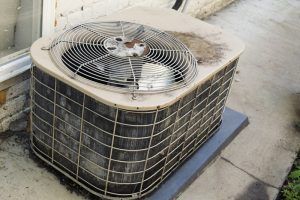
A major part of properly maintaining any machine is to keep it clean. A heat pump is no exception. Dirt and dust can affect the efficiency of your heat pump, as well as speed up corrosion problems. Keep the compressor and coils clean. Check them monthly or so and remove any accumulated dirt. Also, consistently check and change filters according to the manufacturer’s recommendations.

Simple cleaning is an easy and effective first step to heat pump maintenance, but there are some things that you just won’t be able to do on your own. For more intensive maintenance, it is best to call in a professional for an annual inspection.

During a routine maintenance check of your heat pump, a technician will inspect the whole heat pump system for problems. He will clean the compressor and coils, tighten any connections that may have loosened up and change the filters as needed. In addition, a skilled technician will be able to detect any early signs of trouble and make necessary repairs to prevent break downs. These small repairs can prevent big problems later on, thereby preventing some serious discomfort and a possible big expense.

If you are considering a heat pump as a heating and cooling solution for your home, great. If you have already decided on one and had it installed, congratulations on making a smart decision. Now, make another smart decision to protect that investment by keeping your new heat pump properly maintained.

0% Financing for 36 Months-Trane XLi Systems and Trane Comfort Controls

February 1st, 2012

Imagine coming home everyday to an environment that’s as fresh, clean and healthy as it is comfortable.  Now is the perfect time to make that a reality, with a Trane High Performance Heating and Cooling System.  And with 0% apr financing with equal payments for 36 months, it’s never been so easy to own one.

Maximum comfort, lower heating and cooling costs, clean indoor air, and affordable payment options – that’s the Trane difference.

Purchase a qualifying Trane XLi System and Trane Comfort Control and receive 36 months no interest 

ACI Northwest Heating to choose the system customized

to fit your family’s needs.

208-772-9571 or www.acinw.com

See your independent Trane dealer for complete program eligibility, dates, details and restrictions.  Special financing offers valid on qualifying systems only.  All sales must be to homeowners in the United States.  Void where prohibited.   The Home Projects Visa card is issued by Wells Fargo Financial National Bank. Special terms apply to qualifying purchases charged with approved credit at participating merchants. The special terms APR will continue to apply until all qualifying purchases are paid in full. 0%/12 Months: Regular minimum monthly payments are required during the special terms period.  Interest will be charged to your account from the purchase date at the APR for Purchases if the purchase balance is not paid in full within the promotional period. 0% APR/48 Months: The minimum monthly payment will be the amount that will pay for the purchase in full in equal payments during the special terms period. For newly opened accounts, the regular APR is 27.99%. The APR will vary with the market based on the U.S. Prime Rate. The regular APR is given as of 1/10/2012.  If you are charged interest in any billing cycle, the minimum interest charge will be $1.00.  The regular APR will apply to certain fees such as a late payment fee or if you use the card for other transactions.   If you use the card for cash advances, the cash advance fee is 5.0% of the amount of the cash advance, but not less than $10.00.  Monthly payment if shown based on $xx purchase.


Electric Furnace Maintenance Tips for Spokane Homes

January 30th, 2012

Electric furnaces are clean – but homeowners pay for that cleanliness with high utility bills. Depending on the area of the country, electric bills can rival those of gas, oil, or propane. So it is only natural to assume that an efficiently running electric furnace is a must for homeowners who are looking to keep their energy costs down.

Electric furnaces are fairly simple machines. They use heating elements to warm the air, which is then distributed through the ventilation system via a fan or blower. The heating element is made up of a metal wire that is heated by normal electrical current. The element is used to warm or heat something, much like the function of an oven or toaster. Their operation is fairly simple – either they work or they don’t.

When a heating element fails it is usually because it is broken, bend, or misshapen. When that happens, it is time to replace it. You can do some preventive maintenance with a visual inspection of your heating elements. If your inspection does not reveal any problems, you can test the element for continuity. You should know how to use an ohmmeter to test it or ask a professional heating technician to check the elements for you.

Speaking of visual inspection, you can do a quick check for any frayed or damaged wires, which can be a source for wasted electricity, too. Another way to ensure that your electric furnace is running efficiently is to replace or clean your furnace filters on a regular basis. A clogged filter can make a furnace work harder and lead to premature mechanical failure.

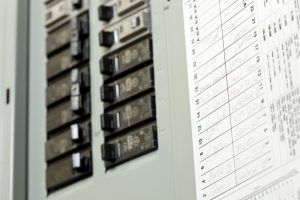
And obviously, if the furnace is not working it is best to check for any blown fuses or tripped circuit breakers in the main electrical panel box. If you find one, make sure you replace it with another of the correct amperage.

Lastly, check to make sure the blower motor is operating correctly. You can have perfectly working elements but if the blower can’t push the warm air through your ventilation system, then all of the steps to ensure the electricity is working are for naught. You can usually hear a noisy motor or smell one that isn’t working improperly. Check it on a regular basis and check the fan belt for any damage or slippage, too.

As you have read, an electric furnace is a very simple machine with simple working parts. Maintaining it is just as simple.